

Early NASA History

SPUTNIK 1957
"Ah, 1957. You remember it, right? Eisenhower in office, Elvis shaking his hips into suburban living rooms, and everyone terrified the Soviets were going to drop something from the sky that wasn't a Beatles record. No? You weren’t there? Hah! Well, I was."
"Now let me set the stage: the Cold War wasn't just chilly—it was downright frostbitten. The United States and the Soviet Union were locked in a global staring contest with nukes in their back pockets, and every advance in missile tech felt like one side breathing a little too hard in the other's direction."
"Then—BOOM—October 4, 1957. The Soviets launch Sputnik 1, the first artificial satellite, and suddenly every American kid is looking up at the night sky wondering if that blinking star is spying on them. Spoiler: it wasn’t, but it was a wake-up call. That little beeping ball, not much bigger than a beach ball, scared the living static out of Washington. They called it the ‘Sputnik shock’—and trust me, I haven’t seen that many senators panic since Prohibition."
"The message was clear: the Soviets had rockets that could not only reach orbit but maybe… just maybe… drop something a whole lot more dangerous on American soil. Overnight, space stopped being the final frontier—it became the front line."
"And that's when President Dwight D. Eisenhower stepped in—quietly confident, a man who knew the cost of war and the value of preparation. On July 29, 1958, he signed the National Aeronautics and Space Act, forming NASA out of the aging—but brilliant—NACA, which had been doing aeronautics research since 1915.


NACA 1915-1958
"NACA was like that quiet, bookish girl in class you never noticed… until the night before the big test when you realized she had all the answers, perfect handwriting, and legs that went on longer than the Wright brothers’ first flight. She reminded me of this dame I met in Casablanca—sharp wit, smoky eyes, knew more about lift coefficients than any pilot I’d ever met. But that… ah, that’s a story for another time."
"But this wasn’t just a name change. No, no—this was a declaration: from now on, space wasn’t just for military brass and rocket men in dark rooms. It was going public. Television cameras. Magazine spreads. Heroes in pressure suits. NASA was going to put America back on top—but with style."
"And that, my friend, is how the stage was set for Project Mercury—the first bold leap toward getting a red-blooded American into the cosmos before the Soviets turned the Moon into a Moscow outpost. But we’ll get to that part in a minute. First, you’ll want to see this tee—it’s got that original NASA worm logo, the vintage capsule sketch, and the same kind of ambition stitched into every thread."

NACA 1915-1958

Before NASA, there was NACA — and they were so low-budget, one of their early wind tunnels was literally powered by car engines… from a junkyard.
When the National Advisory Committee for Aeronautics (NACA) was testing aircraft aerodynamics in the 1920s-40s, they didn’t have high-tech equipment. In fact, at the Langley Research Center, some of the earliest wind tunnels were driven by salvaged Ford Model T engines. It was basically Fast & Curious: Government Edition.
Then in 1958, when NACA became NASA, they upgraded — but you can bet somewhere in a NASA lab, there’s still a paperclip holding a multi-billion dollar satellite together.
Moral of the story: Junkyard engines to moon landings — never underestimate nerds with a budget and a dream.

"So there we were—NASA barely out of the womb, the ink still drying on its birth certificate—and already Uncle Sam was sweating bullets about the Soviets. I mean, you can’t let the other guy keep launching shiny things into space and not answer back, right? That’s not how Cold Wars work. So, what do you do? You announce a bold, history-defining space program barely a week after forming your space agency, that’s what."
"Enter: Project Mercury—unveiled on October 7th, 1958, faster than you can say ‘Godspeed, John Glenn.’ And why 'Mercury'? Not the planet, no—though I’ve been there and let me tell you, hot. No, this Mercury was named after the Roman god of speed and messages, winged helmet and all. Quite fitting for a mission where every second—and every signal—could mean life or vaporized pilot."
"Now, don’t let the sleek capsule fool you. The early days were more duct tape and dreams than high tech. The engineers—led by a sharp fellow named Robert Gilruth—were basically reinventing how to yeet a human into orbit without turning him into flaming space confetti."

Mercury Program 1958-1963

"The Mercury capsule? A little cone barely six feet wide at the bottom. I’ve seen bigger phone booths. It was designed for one brave soul, packed tighter than a genie lamp with retro-rockets, life support, and a heat shield to survive the flaming plunge back through Earth’s atmosphere. Think of it as a cosmic crockpot with attitude."
"They borrowed ideas from ballistic missile programs—those big ol’ rockets the Army and Air Force had been fiddling with—and brought in folks like McDonnell Aircraft to build the capsule. It was a glorious mash-up of military muscle and civilian brainpower, all trying to make space travel look casual in front of TV cameras while secretly praying the math held up."
"Timelines were tight. Budgets were tighter. But spirits? Oh, spirits were sky-high. We weren’t just building hardware—we were building history. And I should know… I was there in the control room, invisibly pacing, wondering if humanity was about to fly… or fry."
Mercury capsule
"Ah, now this—this was the moment the space race got a face. Seven of ’em, actually. And not just any faces—square-jawed, steely-eyed, G-force-defying daredevils with just enough ego to climb into a glorified bullet and say, ‘Sure, light the fuse.’"
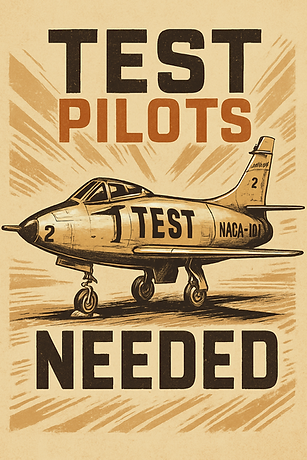
"January, 1959: NASA put out the call. But this wasn’t your average job posting. Nope, they were looking for test pilots under 40, in perfect health, with at least 1,500 hours of flight time, a bachelor’s degree, and—though it wasn’t listed—a complete disregard for personal comfort and fear of death. Over a hundred hotshot flyboys threw their hats in the ring, and by April, NASA had picked their champions. The press dubbed them the ‘Mercury Seven’—and ohhh, what a crew they were."
"Let me paint you a picture: Scott Carpenter, philosopher-pilot with a poetic streak. Gordon Cooper, confident and cool. John Glenn, the golden boy—clean-cut, all-American, the kind of guy moms wanted for a son and daughters wanted for a first dance. Then there was Gus Grissom, a bulldog in a flight suit. Wally Schirra, the prankster. Alan Shepard, competitive to a fault. And Deke Slayton, steady as bedrock—even if heart trouble would eventually sideline him from early flights."

Mercury Flight 1959


"They trained like gladiators. Thrown into centrifuge chambers that spun them like pizza dough, stuffed into parabolic flights on the ‘Vomit Comet’ to simulate zero gravity (I’ll spare you the smell), and dropped into jungles and deserts for survival training—in case their capsule came down somewhere less than hospitable, like the Sahara or, say… Ohio."
"But more than astronauts, they became icons. Their faces were in every newspaper, their names on cereal boxes. They shook hands with presidents and grinned on live TV while the Soviets kept lobbing probes and taking lunar selfies. When Luna 3 snapped the first-ever images of the Moon’s mysterious far side, the pressure on these men skyrocketed. They weren’t just flying for science—they were flying for pride, politics, and the very idea of American progress."
"And me? I stood in the background, watching it all unfold like some immortal stagehand who’d seen a thousand hero myths… but never one quite like this."
Mercury Flight 1959
Its all fun and games until training starts...
"During suit testing, poor Wally Schirra got so inflated he couldn’t bend his arms—just stood there like an angry Michelin Man muttering, ‘Guess I won’t be scratching anything in orbit.’”
“They put John Glenn in a spinning chair to test disorientation—he puked, saluted, and said, ‘Let’s go again.’ That’s when I knew the man was either brave... or broken.”
“During desert survival training, Gus Grissom tried cooking a lizard on a mirror. Burned the meat, blinded himself, and still declared it ‘edible-ish.’”

Mercury Program 1958-1963

"Don’t let the clean suits and shiny rockets fool you—early Mercury tech was held together by genius, guts, and more last-minute fixes than a high school science fair. They were pushing the limits of what 1950s engineering could do, using modified intercontinental ballistic missiles—y’know, the kind originally built to deliver not-so-friendly greetings across oceans."
"For the early suborbital hops, they used the Redstone rocket—reliable-ish, if you liked your rides short and spicy. But to actually orbit the Earth, they had to strap the capsule onto the Atlas—a twitchy, undercaffeinated giant that had a nasty habit of exploding when asked to do anything complicated."
"To avoid turning brave test pilots into space toast, NASA started with unmanned launches and—get this—animal astronauts. The most famous? Ham, a chimp with more flight time than most Cold War generals. On January 31, 1961, Ham rode the Mercury-Redstone 2, hit the buttons he was trained to hit, and came back a national hero—with a better press tour than some of the humans, if I’m honest."
"Every test, every fiery mishap, every squawking monkey capsule taught NASA something new. Engineers worked like mad alchemists, rebuilding, retooling, redesigning after each trial. It was high stakes, low margin, and absolutely no room for pride—or gravity, for that matter."
"Behind the scenes, though? Oh, it was pure Cold War cloak-and-dagger. Nobody wanted the Soviets to know how close we were to greatness—or disaster."
Mercury Program 1958-1963
TEST PILOTS 1958
Mercury Program 1958-1963
"April 1961... I remember the air—it was tense, electric, like a drumroll stretched across the entire planet. And then: Yuri Gagarin. The Soviets beat us to it. First man in space. One full orbit. He blasted off in Vostok 1, waved to the clouds, and came back down smiling like he just won the Cold War single handedly. And in a way... he did. The world gasped, America panicked, and Kennedy? Kennedy dropped the mic."
"On May 25, 1961, JFK stood before Congress, chin high, hair perfect, and said: ‘We choose to go to the Moon.’ Just like that. Not because it was easy—oh no—but because it was a way to slap destiny in the face and say, ‘Not today, comrade.’ That speech didn’t just change policy—it turned Project Mercury from a test program into a launchpad for history. Mercury would lead to Gemini, which would lead to Apollo, which would lead to... well, you know the flag I’m talking about."
"But the road there? Whew. Bumpy. Take poor Gus Grissom, who made it safely back from his Mercury flight—Liberty Bell 7, July '61—only to watch the capsule sink like a stone before they could fish it out. Helmet still on, soaking wet, he swore up and down he didn’t blow the hatch early. I was there. I believe him. Mostly."
"Just a few weeks before that, Alan Shepard had taken the first American suborbital flight—May 5, 1961. It only lasted 15 minutes, but it was enough. The cheers, the headlines, the tears on every launch engineer’s face... it gave America its swagger back."
"And finally—February 1962—John Glenn soared into orbit aboard Friendship 7, circled the Earth three times, and landed as a national legend. I watched that one from the stratosphere with a lump in my throat the size of Florida."
"That whole era—Mercury’s rise, its stumbles, its triumphs—it was a time of wild courage, mad science, and political pressure you could chew like taffy. But it worked. Mercury proved we could reach space… and survive it. It lit the spark that carried us to the Moon and beyond."

Introduction to Project Mercury and the Need for Astronauts
"The Project Mercury—NASA’s first official handshake with the stars. Born in 1958, fresh off the global freak-out caused by the Soviets’ shiny little beach ball, Sputnik 1, Mercury was America’s answer to the cosmic dare: Get a human into orbit, figure out if their brains melt in zero gravity, and—ideally—bring them back in one piece. Simple goals. Monumental challenge."
"Now here’s the fun bit: before Mercury, there was no such thing as an astronaut. Not even a job listing. NASA had to invent the role and figure out who could actually do it—without, you know, dying."
"That’s where the Space Task Group came in—formed November 5, 1958, over at Langley Research Center in Hampton, Virginia. Headed by the brilliant and steady Robert Gilruth, with key players like Charles J. Donlan and Warren J. North, these folks were the original dreamers and engineers of human spaceflight. They weren’t building just a capsule—they were building a new kind of hero."
"And then along comes President Eisenhower, cool as ice, and says, ‘Let’s keep it simple—pick from military test pilots only.’ Boom. That cut through the red tape like a hot knife through bureaucratic butter. The military guys already had the right stuff: flight hours, medical clearances, and top-secret clearance stamped six ways to Sunday."
"Of course, that also meant civilians, women, and people of color were left out entirely—because the world wasn’t ready yet. Even though the future was knocking, Mercury still came with the baggage of its time. We’d change that… eventually. But that’s a different chapter."
"So there you had it—a military-powered, government-backed space program run by a civilian agency trying to build a spaceship faster than the Soviets could blink. No pressure, right?"

Mercury Program 1958-1963
Yuri Gagarin 1961
"By November 1958, the Space Task Group was in full brainstorm mode, trying to figure out who, exactly, was insane enough to ride a missile into space. Engineers? Scientists? Balloonists? There was even talk of submariners—folks who knew a thing or two about small, claustrophobic tubes with questionable plumbing. But then Ike—good ol’ Eisenhower—dropped the directive: military jet test pilots only. Boom. Narrowed faster than a g-suit in a pressure chamber."
"By January 1959, the rules were set in stone—or rather, typed in triplicate. If you wanted to be an astronaut, here’s what you needed: Under 40, to make sure your ticker could take the heat. Under 5’11”, because that Mercury capsule had the legroom of a glovebox. Flawless health, a bachelor’s in engineering (or close enough), graduation from a military test pilot school, at least 1,500 hours of flight time, and full qualified jet pilot credentials."
"Oh—and nerves of steel wrapped in duct tape and coffee grounds. That part wasn’t written down, but trust me, it was understood."
"These standards were shaped by NASA’s top brass—Administrator T. Keith Glennan, Deputy Hugh Dryden, and Robert Gilruth, who knew this was more than just a job listing. They weren’t just picking pilots—they were crafting symbols, living embodiments of courage, precision, and Cold War swagger."
"And somewhere in that flurry of memos and missile diagrams, on December 1, 1958, someone casually tossed out a word that stuck: ‘Astronaut.’ Not brand-new, no—sci-fi had used it before—but this was the moment it got stamped with government ink and a mission patch."
"And don’t let anyone tell you this was just about flying—these guys had to know engineering, systems design, survival strategy, and how to look good doing it on black-and-white television. Because when you're strapped to a rocket, you'd better know what every button does... and which one not to press mid-sneeze."

Astronaut Training

Mercury Program 1958-1963
Dont eat the local plants...
“During a press tour, one of the Mercury engineers was asked if the capsule had a bathroom. He deadpanned, ‘Only if you plan ahead.’ Let’s just say… Alan Shepard’s historic flight ended with a very awkward radio call and one very soggy space suit.”
“During survival training in the jungle, the astronauts were told to eat local plants to simulate an emergency landing. Gus Grissom took one bite of something green and bitter, made a face like he’d kissed a Martian, and muttered, ‘I’d rather crash in Texas.’
“In a centrifuge test, Wally Schirra hit such high G-forces his face basically melted into his neck. When it stopped, he looked around and said, ‘Well, now I know what my socks feel like in the dryer.’”

Ape Astronauts
"January 1959: the great astronaut roundup begins. NASA sent a quiet little request to the Department of Defense: ‘Send us your best, brightest, and least likely to explode under pressure.’ What they got back? A fat stack of records for 508 military test pilots—graduates from top-tier Navy, Air Force, Marine Corps, and even a handful of Army test pilot schools. Though the Army guys didn’t make the final cut. Not enough hit the height, flight time, or didn’t panic near buttons."
"From there, a crack team of evaluators—Donlan, North, Gamble, Voas the psychologist, Augerson the flight surgeon, and Ruff the psychiatrist—started combing through the paperwork like it was the Academy Awards of high-speed survival. They narrowed it to 110 elite candidates: 58 Air Force, 47 Navy, and just 5 scrappy Marines who could fly circles around anything that moved."
"To keep things organized (and probably because the Pentagon cafeteria only had so many trays), they broke the group into thirds. The first 35 candidates showed up at the Pentagon on February 2, 1959, for a top-secret presentation about Project Mercury. No photos, no press—just cold coffee, confusing slideshows, and Donlan saying things like ‘You might be launched into space in a metal capsule smaller than your linen closet—any questions?’"
"The following week, a second group of 34 got the same pep talk. NASA made it crystal clear: volunteers only. No shame in backing out—just don’t tell your wife it was because of the monkeys. Out of those 69 briefed, 53 stepped forward for further evaluation. Some dropped out because of family, others didn’t like the odds. One guy simply said, ‘I don’t trust rockets.’ Smart man. Not wrong."
"Those who stayed got whisked to NASA HQ for a charming buffet of psychological and academic tests—things like the Miller Analogies Test, Doppelt Mathematical Reasoning, and other exams designed to separate the cool-headed thinkers from the hotshot flyboys who couldn’t math their way out of a slide rule."
"Then came the interviews—deep dives into motivation, mindset, and medical history. Donlan, North, and Gamble ran the technical grill. Ruff and Levy poked around the psyche. Augerson handled the medical files. A few were disqualified for being too tall (curse you, long-legged legends), others for minor medical quirks. In the end, they trimmed it down to 32 prime candidates: 15 from the Navy, 15 from the Air Force, and 2 Marines who probably wrestled grizzly bears for breakfast."
"The third group? Never called. They had what they needed. And somewhere in that final 32… were the men who would go down in history as the Mercury Seven."