

Skunk Ape
Foul-smelling Florida ape-man reported by witnesses and photos
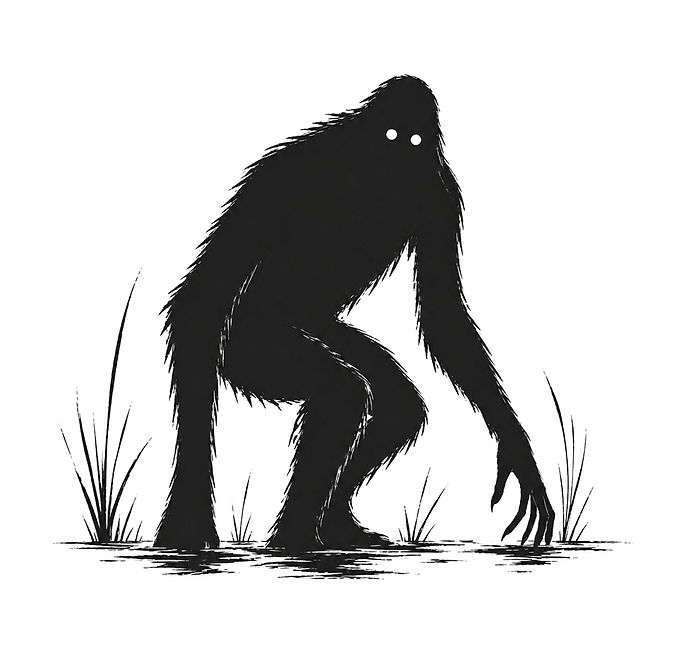
The Skunk Ape is the Deep South’s most notorious cryptid, a creature reported for decades across Florida’s swamps, forests, and backroads, distinguished not only by its appearance but by a trait so consistent it defines the legend: an overwhelming, nauseating stench. Unlike Bigfoot sightings that often occur in remote mountains, Skunk Ape encounters happen alarmingly close to human habitation, where the humidity hangs thick and the wilderness presses in from all sides.
Reports of a large, foul-smelling, ape-like creature in Florida date back to the 1940s and 1950s, when hunters and rural residents began describing something tall and hairy moving through palmetto scrub and cypress swamps. Witnesses consistently described a creature between six and seven feet tall, broad-shouldered, covered in dark or reddish hair, and capable of standing and walking upright for long periods. The smell—often compared to rotting eggs, sewage, or wet animal decay—was usually detected before the creature itself was seen.
The Skunk Ape gained national attention in the 1970s, when multiple sightings were reported in southern Florida, particularly in the Everglades region. In several cases, witnesses claimed the creature crossed roads at night, forcing drivers to brake suddenly. Others reported seeing it watching from tree lines or standing motionless in shallow water, its reflection barely visible beneath the surface.
One of the most infamous incidents occurred in 2000, when the Sarasota County Sheriff’s Office received anonymous photographs depicting a large, reddish-haired humanoid crouched behind foliage. The sender claimed the creature had been stealing apples from their backyard and frightening their children. The photos were examined publicly, sparking debate. Skeptics argued the figure was an orangutan or a hoax involving a costume, while supporters noted the lack of nearby zoos, the creature’s posture, and the risk involved in staging such images in swamp terrain.
Eyewitness encounters often include a sense of being deliberately observed. Hunters report hearing heavy footsteps pacing them through brush. Campers describe sudden silence followed by deep, rhythmic breathing just beyond visibility. Several accounts involve rocks or sticks being thrown—not to injure, but to warn—suggesting territorial intelligence rather than blind aggression.
Unlike many cryptids, the Skunk Ape has a semi-official presence. The Skunk Ape Research Headquarters in Ochopee collects reports and tracks sightings, documenting hundreds of alleged encounters over decades. While critics dismiss this as tourism-driven folklore, the sheer number of reports—many from experienced outdoorsmen—keeps the phenomenon alive.
Scientific explanations typically point to black bears, escaped primates, or misidentified humans. However, Florida bears are smaller than described and lack the reported odor. The idea of a long-term escaped ape population surviving undetected in the Everglades raises its own questions, particularly given the creature’s reported size, intelligence, and evasiveness.
What separates the Skunk Ape from its northern counterpart is adaptation. Witnesses frequently describe it wading through water, moving silently across mud, and enduring heat that would cripple most large mammals. It appears built for the swamp—patient, concealed, and deeply uncomfortable to encounter.
In Dread Lore, the Skunk Ape is not a fleeting shadow in distant forests. It is a presence felt in the air before it is seen, something that announces itself through smell, proximity, and the unsettling realization that whatever shares the swamp with you knows exactly where you are.