

Goatman
A horned humanoid blamed for violent encounters and bridge-area sightings
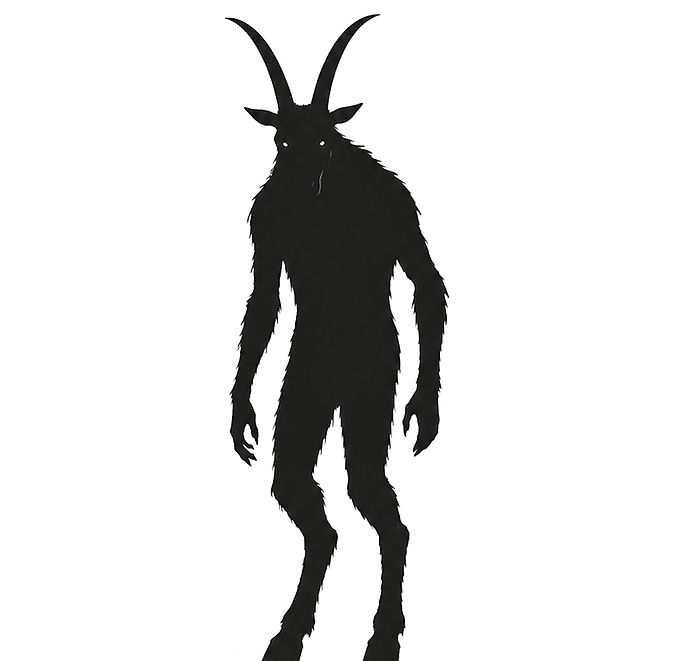
The Goatman is a distinctly modern American cryptid, emerging not from ancient myth but from the uneasy spaces where folklore, rumor, and violent incident overlap. Unlike creatures rooted in centuries-old tradition, the Goatman appears to have formed in fragments—local sightings, whispered warnings, and a handful of grim crimes that gave the legend teeth.
The earliest and most influential origin is tied to Prince George’s County, Maryland, near what is now known as Goatman’s Bridge on Fletchertown Road. In the mid-20th century, locals began circulating stories of a half-man, half-goat figure haunting the wooded areas near the old railroad trestle. One version claims the Goatman was once a railroad worker or scientist who suffered a horrific accident, leaving him disfigured and feral. Another, darker telling describes him as a man who retreated into the woods after committing violent acts, gradually transforming—physically or symbolically—into something monstrous.
What anchors the Goatman legend in real-world dread is its association with actual crime. In the 1970s, the area experienced a string of brutal murders attributed to Kenneth Erskine, nicknamed “The Freeway Phantom.” Though no evidence linked Erskine to the Goatman myth directly, the overlap of geography and timing caused the folklore to absorb the fear surrounding the killings. From that point on, Goatman sightings intensified, as if the legend had found a body to inhabit.
Witness descriptions are strikingly consistent. The Goatman is typically described as tall and muscular, covered in coarse hair, with the legs or hooves of a goat and a pronounced horned head. Many accounts include glowing eyes and a foul odor. Some witnesses claim it carries an axe or other weapon, reinforcing the idea that it is not merely animal, but something intelligent—and hostile.
One frequently cited incident involves a group of teenagers visiting the bridge at night, a common rite of passage in the area. According to their account, they heard heavy breathing and the sound of hooves striking wood before seeing a massive silhouette step into their headlights. Panic followed. The creature allegedly struck the side of the car before vanishing into the trees, leaving deep gouges in the metal. Whether exaggeration or terror-fueled memory, the story has been retold for decades with little variation.
Similar Goatman legends exist beyond Maryland. In Texas, particularly near Denton, sightings describe a horned humanoid stalking rural roads and attacking vehicles. These regional variants differ in origin but share the same core traits: isolation, aggression, and a sense that the creature is tied to human violence rather than wilderness alone.
Unlike cryptids that avoid people, the Goatman seems drawn to them. It appears near bridges, roads, and paths—transitional places where people pass through but do not linger. That behavior, more than its appearance, gives the legend its staying power.
In Dread Lore, the Goatman represents something unsettlingly familiar: the idea that monstrosity is not discovered deep in uncharted forests, but born from human acts and left to fester just beyond the treeline. Whether creature, corrupted man, or collective fear given form, the Goatman waits where civilization thins—and watches who crosses alone.