

Beast of Gévaudan
Historic man-eater described by eyewitnesses in 1764–1767 France
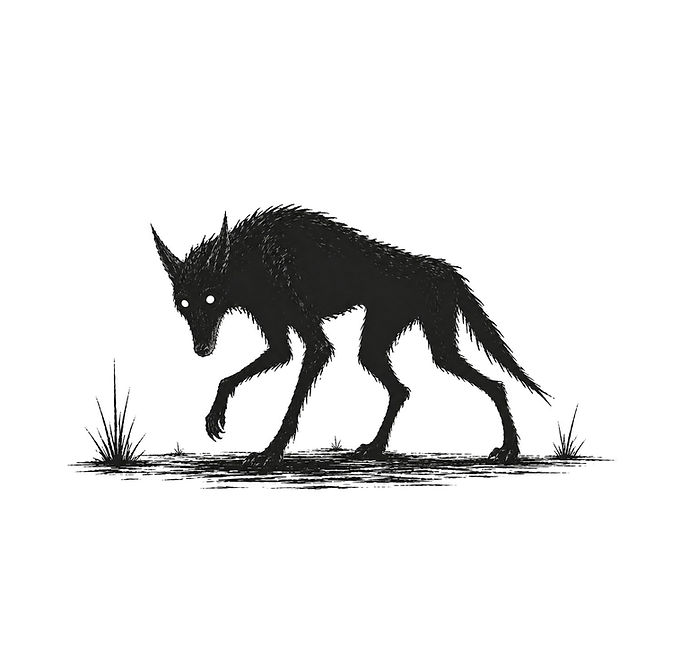
The Beast of Gévaudan is not merely a cryptid—it is one of the most thoroughly documented mysteries in European history, recorded in court documents, church registers, military correspondence, and royal archives. Between 1764 and 1767, an unknown predator terrorized the rural province of Gévaudan in south-central France, killing dozens and wounding many more. Unlike folklore creatures whispered about in isolation, the Beast left a body count.
The attacks began in the summer of 1764, when a young woman tending cattle was killed near the village of Langogne. Witnesses described an animal unlike any wolf they had seen before—larger, faster, and strangely fearless. Over the next months, attacks multiplied. Victims were often women and children, found mutilated, partially devoured, or decapitated. Many showed signs of deliberate targeting of the head and neck, behavior inconsistent with typical wolf attacks.
Descriptions of the Beast varied, but shared disturbing consistencies. Witnesses spoke of a creature larger than a wolf, with a long tail ending in a tuft, a massive chest, and reddish or brindled fur marked with dark stripes. Its head was described as elongated, almost canine but distorted, with powerful jaws. Most unsettling was its behavior: the Beast often ignored livestock to attack humans directly, sometimes charging through armed escorts to reach its prey.
Panic spread rapidly. Local hunts failed. Entire villages organized night watches. By 1765, the situation had escalated to national attention. King Louis XV dispatched professional hunters and soldiers, including the famed wolf hunter François Antoine, who eventually killed a massive wolf believed to be the Beast. The body was paraded, dissected, and declared the culprit.
The killings stopped—briefly.
Within months, attacks resumed.
This resurgence deepened the horror. Survivors reported the same markings, the same unnatural boldness. Some victims fought back and lived, providing firsthand accounts of the creature’s size and resilience. One girl reportedly survived after stabbing the Beast, only for it to retreat and attack again weeks later.
The final chapter came in 1767, when a local hunter named Jean Chastel killed another large animal during a hunt. According to legend, Chastel used bullets blessed by a priest—a detail likely embellished later—but after this killing, the attacks ceased permanently.
What was the Beast?
Explanations range from an unusually large wolf or wolf pack, to an exotic animal such as a hyena or lion escaped from captivity. Others suggest a trained attack animal used deliberately, pointing to the selective targeting and prolonged campaign. Modern forensic analysis of reports suggests multiple animals may have been involved, possibly combined with human exploitation of fear.
Yet no single theory fully explains the Beast’s intelligence, persistence, or psychological impact. It stalked humans in daylight, returned repeatedly to populated areas, and withstood relentless pursuit for years.
In Dread Lore, the Beast of Gévaudan occupies a unique place: not as a shadowy rumor, but as a historical predator that forced an entire region—and a monarchy—to confront the possibility that something beyond ordinary nature was hunting them. Whether animal, anomaly, or something darker, the Beast did not vanish into legend quietly. It was hunted, fought, recorded, and buried beneath ink and blood—leaving behind a chilling truth: sometimes the monster is real enough to be counted.