
The Christmas Donkey of Italy
He carried more than gifts — he carried kindness through the mountains.
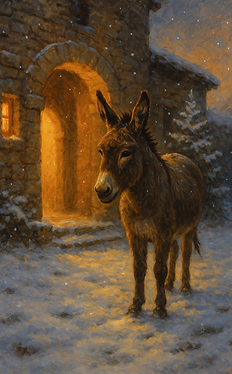
High in the snow-dusted Abruzzo mountains, December arrives not with music but with silence. The valleys go still. The wind hums through pine forests, and roads vanish beneath drifts that turn whole villages into white islands. For families who live in those tiny hamlets, winter can mean isolation — days without deliveries, mail, or even a visit from the postman.
But every year, around Christmastime, a gentle procession appears on the horizon: donkeys with baskets slung across their backs, carrying food, medicine, toys, and letters wrapped in twine. The locals call them gli asini di Natale — the Christmas donkeys.
It began almost a century ago with a priest named Father Antonio. One winter, a storm so fierce it cut the villages off for weeks. The priest refused to let his parish go hungry. He loaded two donkeys with bread, cheese, and bottles of olive oil, then set off up the narrow mountain pass alone. People thought he was mad. But two days later, exhausted and covered in frost, he returned — the donkeys empty, the villages fed.
After that, others joined him. Farmers, shepherds, schoolteachers — ordinary people who wanted to keep the spirit of giving alive, even when the roads failed. Over time, the journey became a tradition. Now, each December, volunteers from the region gather in the village of Scanno to prepare their donkeys. They decorate their saddlebags with ribbons, tiny bells, and sprigs of pine. Children press notes of hope into their hands — “for Nonna,” “for the soldiers,” “for Santa, if he’s listening.”
The climb is slow. The air thins as they rise, and sometimes the snow comes heavy, blurring the world into white. But the donkeys never falter. They move with quiet purpose, their breath misting in the cold, their hooves carving small, steady miracles into the frozen path.
When they finally reach the mountaintop villages, the scene is the same every year: doors open, children run to greet them, and the sound of laughter spills into the snow. The volunteers hand out food, books, and small wrapped gifts. Someone always starts to sing. The bells on the donkeys’ harnesses chime in time, turning the mountains into a kind of living carol.
By nightfall, the procession begins its descent, the lights of the villages flickering below like candles of gratitude.
No one calls them heroes. The donkeys don’t know they’re part of a tradition, and the volunteers don’t do it for recognition. They do it because kindness, like faith, needs to move — to travel from one heart to another, even through storms.
And maybe that’s the lesson of the Christmas donkeys: not that miracles are loud or shining, but that they arrive quietly, step by step, with baskets full of warmth and hooves that never give up.